
Ubud Itinerary
An Ubud itinerary in Bali suits travellers who use Ubud as a base rather than trying to see it on a single cross-island day trip.
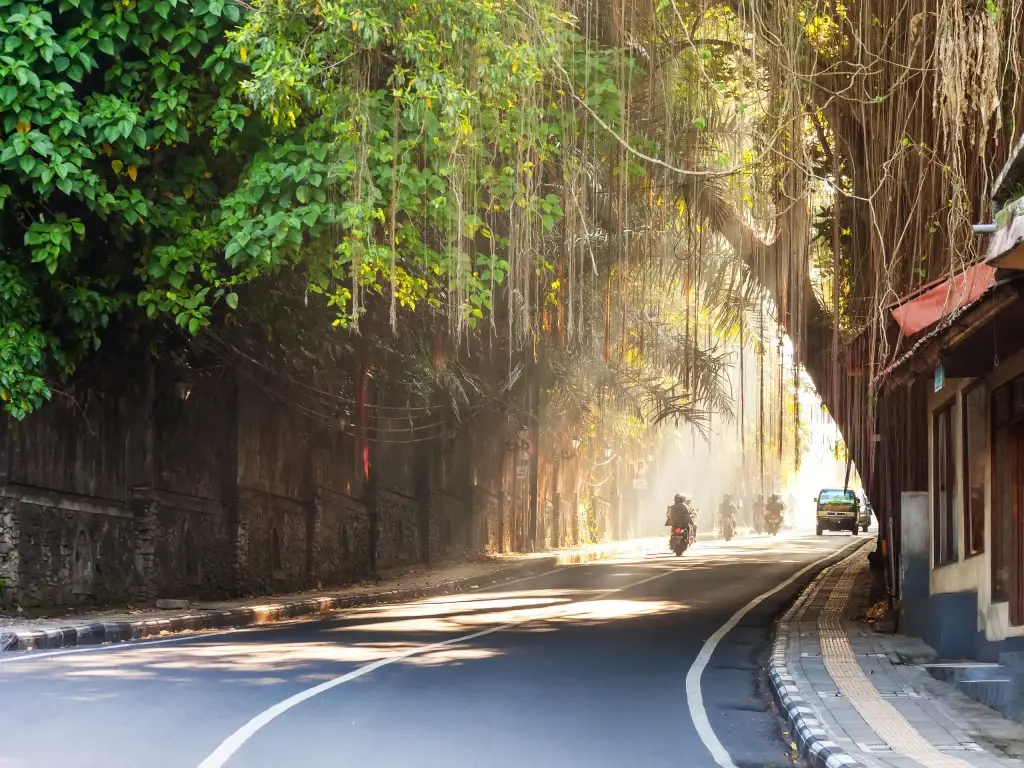
Ubud itinerary Bali: the main stops
Four days in and around Ubud work well when each day runs in one direction, so the drives are grouped and the afternoons stay free. The plan below puts the town centre on the first day, the countryside on the second, a walk on the ridge and a flexible day after that, and a final day for villages and a waterfall.
Day 1: the centre on foot
Start with Puri Saren Agung, the Ubud palace, which was rebuilt after an earthquake in 1917. Walk through the courtyards slowly, then continue on foot through the town centre and its shops and galleries. Keep the afternoon light, and choose an evening performance at the palace or a nearby venue if you want music and dance after dark.
Day 2: the countryside by driver
Use a driver for the outer-area day, because the rice terraces and water temples sit outside the walkable centre. Go early in the morning, when the fields are quieter and the light makes the stepped slopes easier to read. Plan one anchor for the day, such as a terrace walk or a water temple, and add only a single supporting stop before lunch. Be back in town by the middle of the afternoon.
Day 3: the ridge walk or a slow day
The Campuhan Ridge Walk is the best choice for an early start. It is a ridge path of about two kilometres one way, and it is free to enter. Follow it with a market-to-table cooking class, a museum visit or a long lunch, then rest. If the walk does not suit your energy, use the day for a workshop or a wellness session instead.
Day 4: villages and a waterfall
Choose one village workshop for the morning, such as woodcarving or silverwork, and add a waterfall in the afternoon if you have the energy for a short walk. Villages around Ubud are spread across different directions, so keep the outing in one direction rather than crossing the area twice.
Who it suits
Ubud suits visitors who want culture, food, wellness, walks and nearby countryside within one part of the trip. It is a good fit for a traveller who enjoys slow mornings and planned afternoons. If your priority is late-night beach life or daily surfing, Ubud works better as one contrasting base within a longer holiday than as the whole holiday.
Route overview
A good route separates the central town from the outlying attractions, so you do not spend every day moving in and out of traffic. The town itself is compact and rewards walking, while the countryside is best reached by car or with a driver who knows the roads and the timing of the day.
Day-by-day plan
Day 1: keep the centre local, with town, market and cultural stops and a dinner you can reach without a long transfer. Day 2: use a driver or an organised activity for the rice terraces, water temples or countryside experiences that sit outside the walkable centre. Day 3: choose one priority, whether wellness, cooking, craft, a waterfall or a slower food day, and leave the evening open.
Travel times
Walking works in the centre, although pavement quality and traffic vary from street to street. A driver is useful for a grouped outer-Ubud day. Avoid jumping between opposite sides of Ubud for individual meals or activities, because the crossing eats up the time you planned for the experience itself.
Stay suggestions
Central Ubud suits first-time visitors who do not plan to drive. Quieter areas on the edge of town suit travellers who put priority on villas, wellness or a slower environment, but they need more transport for each outing. Choose the neighbourhood first, then book the room, so the daily routine matches the place you choose.
Things to do
Start early for popular outdoor stops, then slow the afternoon. Ubud becomes tiring when every day starts before sunrise and ends with a distant dinner. Use the morning for the walk or the terrace visit, the afternoon for a class, a gallery or a rest, and the evening for a meal close to where you are staying.
Food stops
Keep central meals on the central day and outer-area meals near the route of the countryside day. A restaurant on the opposite side of town can turn a relaxed evening into another traffic transfer, so check the distance before you book. The Ubud food guide lists dining options by area.
Costs
Ubud can be inexpensive or premium depending on accommodation and wellness choices. Spend on the experiences that need expertise, such as a guide, a class or a spa, and use walking and local meals where they genuinely fit the day.
Alternatives
Families can replace a long temple and terrace day with shorter hands-on activities. Couples may prefer a spa or a private cooking experience. Repeat visitors can skip the headline sights and spend more time in villages or workshops, which often give a better sense of daily life.
Weather backup
If rain affects rice-field or waterfall plans, move the outer day and use the centre for food, galleries, craft, wellness or a shorter cultural visit. Ubud rewards flexibility more than a fixed chain of attractions, so keep the next day adjustable as well.
Booking notes
Book accommodation by neighbourhood first, then secure any guided cultural experience, class or wellness session that has limited capacity. Leave most of the central walking time open so you can change plans without losing a booked activity.
The palace and the ridge in brief
The palace at the start of Day 1 was rebuilt after an earthquake in 1917, so the buildings you see are twentieth-century rebuilds rather than the original structures. Its courtyards are a working part of the town, which is why it helps to visit calmly and keep to the areas open to visitors. Dress modestly, and treat any performance there as part of the palace’s life rather than as a show built only for visitors.
The rice terraces on the Day 2 drive belong to Bali’s subak system, the farmers’ cooperatives that share irrigation water through water temples. UNESCO listed the cultural landscape in July 2012, and the system is built around the temples that manage the flow of water to the terraces. Going early in the morning makes the water channels and the way the fields step down the slope easier to see.
The Campuhan Ridge Walk begins close to Pura Gunung Lebah, a temple near the place where two rivers meet. The name Campuhan refers to that meeting of waters, and the trail runs between two valleys. The walk is free and about two kilometres one way, which makes it a comfortable stroll before the day warms up. Wear sensible shoes, since the path can be uneven in places.
Related guides
For neighbourhood context, the Ubud Travel Guide is the place to start, and the Where to Stay in Ubud page covers accommodation. For activity choices, see Things to Do in Ubud.
Build the Ubud route around your pace
Start by choosing the number of nights and the energy level you want for the trip. A shorter stay should keep the centre and one countryside outing close together. A longer stay can add a quieter morning, a workshop or a second inland route without making every day a transfer day.
Keep arrival and departure days outside the main sightseeing count. If either day involves luggage, a long road journey or a flight, reduce expectations. A plan becomes more useful when it shows which stops can be removed without breaking the route.
One-base and two-base versions
Use Ubud as one base when you want to unpack once and explore inland Bali at a measured pace. This suits travellers who want food, culture and wellness to share the same part of the trip. Use Ubud as one of two bases when you want a clear contrast with the coast or another landscape. Place the transfer where it does the least damage to the experience.
Read How Many Days in Bali before adding a third base. The extra address should create a meaningful change, not merely cover more of the map.
A practical day pattern
Use a central day for walking, food, galleries, a cultural stop and an evening that does not require another long ride. Use an outer-area day for one grouped route with a driver or organised activity. Use a flexible day for wellness, a class, a workshop, a slower meal or a return to a place you enjoyed. This pattern stays resilient when rain or energy changes the order of the days.
For the outer day, choose the anchor before the supporting stops. A waterfall, a rice-field walk, a village experience or a temple visit may each need a different start and level of effort. Do not stack them simply because they share a broad region. The road, the lunch and the return journey are part of the day.
Versions for different travellers
Families can shorten the cultural and outdoor sections and protect a rest period. Couples can use the flexible day for a shared food or wellness experience and leave one evening unplanned. Solo travellers may prefer a guided outing on the day with the most unfamiliar movement. Repeat visitors can replace headline sights with craft, neighbourhood food and slower observation.
These are changes in emphasis rather than separate routes. The same pattern works for different travellers when the number of anchors and the amount of recovery time are adjusted honestly.
Food and accommodation choices
Keep meals on the side of town where the day already takes place. Use the Ubud Food Guide to choose between central convenience and a meal that justifies a longer ride. Use Where to Stay in Ubud to decide whether your accommodation makes spontaneous dinners easy or asks you to plan them in advance.
What to change when rain arrives
Move outdoor plans rather than forcing them into poor conditions. A central food, gallery, craft, cooking or wellness day can replace a countryside route while keeping the character of the trip. Keep the next day adjustable so the plan does not become a chain of cancelled outings.
Questions about an Ubud route
Is three days enough for Ubud?
Three full days can give a balanced first look when the route uses one base, one central day, one grouped outer day and one flexible period. Arrival and departure times may reduce that capacity.
Should Ubud come first or last?
Either can work. Choose the order based on the contrast you want, the transfer logic and whether you prefer to begin with inland discovery or finish with a quieter base.
Can I visit Ubud as a day trip?
You can see a small part of the town in a day, but an overnight stay gives the town, food and slower inland rhythm more room. A day trip should have one clear purpose rather than trying to cover the whole destination.