
Nusa Penida Travel Guide
Nusa Penida Bali: A rugged island destination known for high cliffs, dramatic viewpoints, beaches and marine experiences, with more demanding roads and logistics than mainland resort areas.
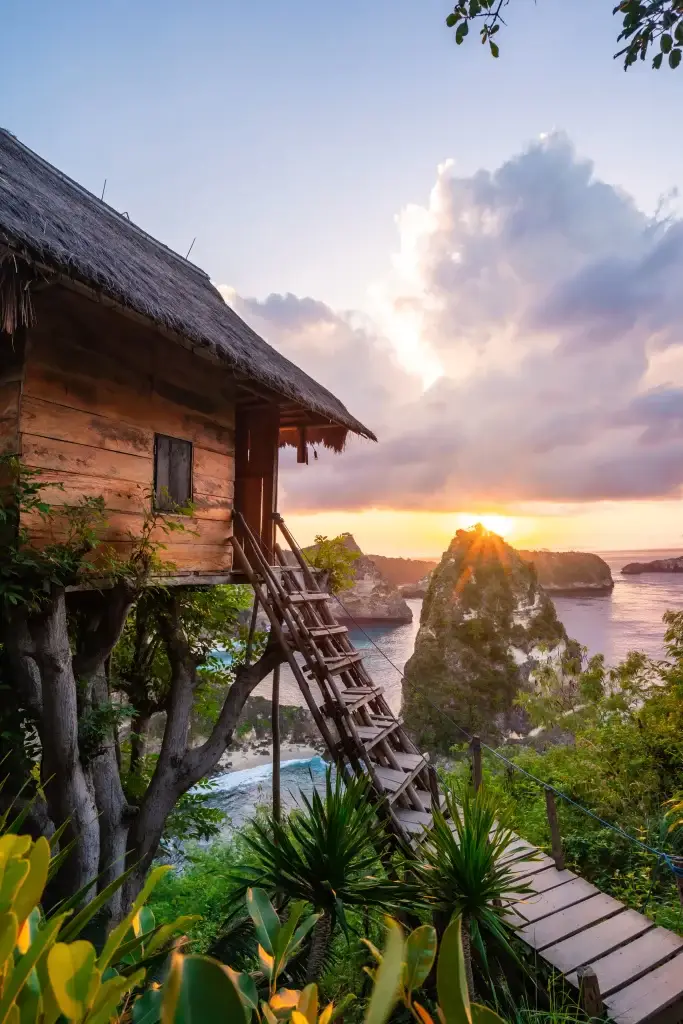
Overview
Nusa Penida Bali: what to weigh first
Who it suits
For Nusa Penida, the strongest fit is travellers who prioritise scenery, diving or snorkelling and who accept early starts, rougher roads and less spontaneous movement.
Why visit
Choose Nusa Penida when you specifically want the scale of the coastal landscapes and access to marine sites that cannot be reproduced by a quick stop at a south Bali beach.
Trade-offs
Before booking Nusa Penida, accept this trade-off: popular viewpoints can be crowded, road journeys are tiring, some famous beach access is steep, and a day trip can become more transport than experience.
How many days
Two or three nights gives a more useful island experience than a rushed checklist day; divers may want longer depending on the planned sites and conditions.
Best areas
The useful Nusa Penida location choice is Choose the side of the island around your priority activities rather than treating every attraction as equally close. Harbour convenience and sunset-view ambitions often pull in different directions.
Where to stay
Accommodation is more varied than the island’s day-trip image suggests, but location and road access matter. Confirm whether your stay can arrange transfers and early activity departures.
Things to do
Use viewpoints selectively, add beach access only when the descent suits your fitness, and plan snorkelling or diving with a reputable operator according to sea conditions.
Food
Food is simpler and more dispersed than in major mainland visitor hubs. Staying near a cluster of restaurants can make evenings easier after long road or boat days.
Getting there and around
Arrival is by boat, then road transport becomes the main challenge. Build margin around boat schedules and do not promise a flight connection based on a tight same-day chain.
Best time
Marine and cliff activities are highly condition-dependent. Wind, swell, rain and heat can change what is sensible on a given day.
Suggested itinerary
Arrival and a nearby area on day one, one focused west or east route on day two, and a marine or second-area day if you stay longer.
Nearby places
Nusa Lembongan offers a smaller, easier-going island contrast, while Sanur is a practical mainland staging point for many boat departures.
Local help
Drivers and marine instructors matter more here than trying to self-navigate every road. Choose guides and operators around safety, schedule clarity and realistic routing.
Related guides
From Nusa Penida, open the matching stay, food, activity and itinerary guides.
Nusa Penida is an excursion or an island stay
Nusa Penida can mean two different travel experiences. A short visit treats the island as a concentrated landscape excursion. A longer stay allows more time for the scale, roads, viewpoints and quieter stretches to shape the day. Decide which experience you want before choosing a route, because an excursion mindset encourages a packed list while an island stay needs room for weather, energy and return journeys.
The island rewards visitors who accept that dramatic scenery often comes with effort. A viewpoint may involve a physical approach, a longer road section or a slower return than the map suggests. The right plan leaves enough space to enjoy the place rather than treating every stop as a photograph to collect.
Who Nusa Penida suits
Nusa Penida suits landscape-focused travellers, photographers, couples and visitors who enjoy a day with a clear route and a strong visual payoff. It can also suit adventurous families when the adults choose access and pacing carefully. It is less comfortable for travellers who want every activity to be close, level and easy to change at the last minute.
If your trip needs a gentle coastal base, compare Sanur. If you want a wider choice of food and services, compare the southern mainland areas before adding the island. Nusa Penida is most satisfying when its difference is the reason for going.
Choose an island plan by effort, not by fame
Start by ranking what matters most: cliffs, beaches, water, sunrise, village roads, temples or the feeling of being away from the mainland. Then choose the route that serves that priority. A plan that includes every famous-sounding location may look complete but can leave little time for the actual landscape.
- Viewpoint-led: suits visitors who want dramatic scenery and accept more road and access effort.
- Water and beach-led: suits travellers prepared to judge access honestly and to keep conditions in mind.
- Slow island stay: suits visitors who want mornings and evenings without a mainland timetable.
- Short excursion: suits travellers with limited time who choose only the highest-priority route.
Ask how the route feels for everyone travelling with you. Physical effort, heat, stairs and uneven access are part of the destination decision. Build an alternative that still feels like Nusa Penida if the most demanding stop does not suit the day.
Why staying overnight changes the experience
An overnight stay can remove the pressure to make every decision fit one crossing and one return. It gives you the chance to start early, pause during the hottest part of the day and see how the island feels after day visitors leave. The trade-off is that you need to be more deliberate about accommodation, food and transport because the mainland’s wider choice is no longer immediately available.
For a short stay, keep arrival day simple. Settle in, learn the nearest useful route and choose one local plan. Put the most important landscape day after you have recovered from the transfer. This is more robust than arriving and immediately attempting the longest route.
Transport and route discipline
The island is easier when transport is treated as part of the itinerary rather than a gap between attractions. Decide whether you will arrange a driver, use another supported option or keep your plans close to the accommodation. Do not build a day that depends on changing plans at every stop.
Use a map to understand sequence, not to promise exact timing. Leave room for road conditions, stops, weather and the simple fact that a landscape deserves longer than the time needed to arrive. The first-time Bali guide can help you decide whether an island chapter fits the overall pace.
Food, rest and the evening return
Nusa Penida days can be more tiring than they look. Eat before the group is already depleted, carry what the route requires and make the evening deliberately simple. If you are staying overnight, choose a meal that supports recovery rather than adding another long crossing.
For a wider explanation of Balinese food and how to choose meals by the type of day, use the Bali food guide. The best island meal is often the one that fits the route and leaves you ready for the next morning.
Questions before visiting Nusa Penida
Is Nusa Penida suitable for a first Bali trip?
It can be if the traveller wants dramatic landscapes and accepts a more effortful route. It is not the easiest first base for someone seeking a low-friction introduction.
Should you take a day trip or stay overnight?
Choose a day trip when time is limited and one route is enough. Stay overnight when you want a slower island experience and the ability to spread the effort across more than one day.
What is the common planning mistake?
The common mistake is counting viewpoints instead of planning the energy, access and return journey each one requires.
Make the choice work in the whole trip
The decision behind the page
The useful question behind Nusa Penida is how to make a real trip easier, not how to collect more options. This page focuses on area, arrival time, daily movement and neighbourhood fit. Those decisions affect one another: a late arrival changes the first night, a long transfer changes the appetite for a busy afternoon, and a generous budget still cannot buy back energy lost to an overfilled route. Begin by naming the one outcome this page must support, then judge every suggestion against it.
Start with the person who carries the cost
Plans are often described as if everybody experiences them in the same way. They do not. A child, a cautious first-time visitor, a light sleeper, a traveller with limited mobility, a person avoiding certain foods or the member coordinating the group will notice different friction. Put that person into the decision early. If an option works for them without making the rest of the group miserable, it is usually a stronger shortlist than one chosen only for its headline appeal.
Separate the attractive from the useful
An attractive idea deserves a second question: what does it ask in return? The answer may be an early start, a long drive, a booking commitment, uncertain weather, extra equipment, or a return journey at the least convenient time. None of those costs automatically rules an option out. They simply need to be visible. A useful guide gives the reader permission to choose the smaller experience when it better protects the rest of the day.
Use a route before a list
Put the non-negotiable first, then add only what sits naturally beside it. This matters particularly for Nusa Penida. A plan that repeatedly crosses the island may look full in a spreadsheet and feel thin in practice. Grouping by place reduces decisions, leaves more time for meals and rest, and gives weather or traffic somewhere to go. The route does not need to be rigid; it needs a clear spine and a sensible way to shorten the day.
Make a primary choice and a fallback
Choose one preferred version and one lower-friction alternative. The fallback should be easier in a specific way: closer, shorter, calmer, less weather-dependent, or easier for a person to leave early. Do not create five backups, because a large contingency list becomes another form of indecision. Confirm the detail that matters most, then stop researching when the remaining uncertainty is acceptable.
- Fit: match the choice to the people travelling.
- Condition: identify what could change the plan.
- Fallback: keep one easier version nearby.
Check the first and last hour
The beginning and end of a day reveal whether a plan is realistic. Where does the group wake up? How long does the first movement take? Is there food when people need it? Can the return happen without a forced late night? This check catches plans that look reasonable only because the map ignores traffic, queues, heat, changing clothes, finding a driver, or the simple need to pause.
A compact comparison method
Use four questions: who is this for, who will dislike it, what is the trade-off, and what is the next action? Apply them to each serious option. For Nusa Penida, that makes the copy useful at the moment of choice instead of leaving the reader with a larger pile of names. It also keeps neighbouring pages separate: an area page can own the base, an activity page can own the experience, and a practical page can own the preparation.
| Question | Why it matters |
|---|---|
| Who is it for? | It clarifies the real audience. |
| Who may dislike it? | It exposes the mismatch early. |
| What is the trade-off? | It makes the cost visible. |
Keep the plan honest
Avoid promising a perfect day. A better plan says what is known, what depends on conditions and what remains the traveller’s judgement. Weather may alter a view, traffic may change a transfer, a venue may be full, and a group may simply want to stop. The plan is doing its job when those changes can be absorbed without making the whole trip feel like a failure.
The next useful step
After reading Nusa Penida, take one action. Shortlist the option, check the relevant condition, reserve the time-sensitive part, or deliberately leave the choice open. Then return to the wider route and test whether the decision supports the next day. That final pass is where good travel advice becomes a usable plan: the choice has a place, a reason and a reasonable escape route.
